Blog
The State of Text Message Marketing: Insights From The 2026 Business Texting Benchmark Report
Text message marketing has quietly become one of the most powerful communication tools available to businesses.
While email inboxes grow more crowded and social media algorithms continue to limit organic reach, text messaging remains one of the few channels where businesses can reliably reach customers directly. Messages are typically read within minutes, conversations can happen instantly, and engagement rates remain dramatically higher than most other marketing channels.
But while many companies recognize that SMS works, far fewer understand why it works, or how to optimize it.
That’s exactly why Project Broadcast launched PB Data Labs, a research initiative dedicated to understanding how businesses use SMS messaging at scale.
In the first PB Data Labs report, we analyzed over 170 million text messages sent through the Project Broadcast platform in 2025. The goal was simple: identify the patterns behind high-performing business messaging and provide actionable insights businesses can use to improve their text marketing strategy.
What we discovered confirms something many businesses already suspect: SMS is most powerful when it’s used as a conversation channel rather than just a marketing broadcast tool. Get the report here.
Why Data Matters for Business Texting Strategies
Despite SMS adoption growing rapidly, most businesses still rely on intuition when deciding how to use text messaging. Using the gut check method to answer questions like “When should we send messages?” or “What causes customers to unsubscribe?”
Until recently, answering these questions required limited sample sizes or anecdotal feedback.
PB Data Labs was created to change that.
By analyzing millions of messages sent through the Project Broadcast platform, we can identify real-world patterns across industries, message types, and communication styles.
Our first texting benchmark report provides one of the most comprehensive looks at how businesses actually use text messaging today.
What We Analyzed
The PB Data Labs report examined more than 170 million outbound text messages sent in 2025 through Project Broadcast.
For each message, the analysis evaluated several performance indicators, including:
- reply behavior within a defined time window
- unsubscribe activity
- message timing
- message type
These signals help reveal how customers respond to different SMS strategies.
The goal was not simply to measure engagement, but to understand what types of communication actually create meaningful interactions between businesses and customers.
Key Insight: Conversations Drive Engagement
The single biggest takeaway from the PB Data Labs report is this:
The most successful SMS strategies prioritize conversation over broadcasting.
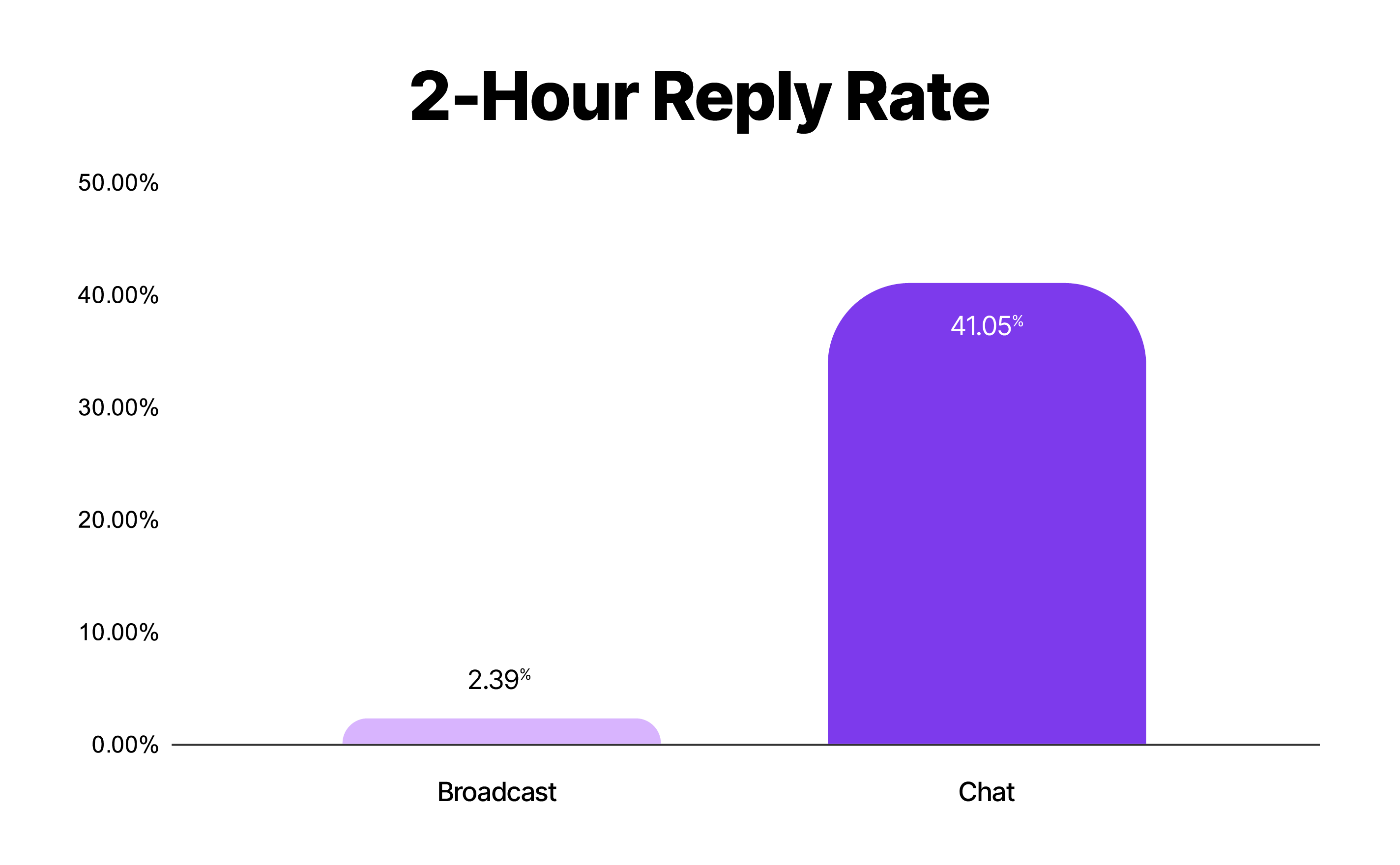
Businesses often begin their text messaging journey by sending broadcast messages. These messages allow companies to communicate with many customers at once and are commonly used for promotions, announcements, or updates.
Broadcast messages are valuable for reaching audiences quickly.
However, the data shows that the highest levels of engagement occur when messages invite or enable a response.
When customers reply to a text message, something important happens: the interaction becomes a conversation rather than a campaign.
Conversations create several benefits:
- stronger customer relationships
- increased trust
- higher likelihood of repeat engagement
- greater opportunity for sales or support resolution
In other words, the most effective SMS strategies treat text messaging as a two-way communication channel.
The Role of Timing in SMS Performance
Another key finding from the PB Data Labs report is the importance of timing.
Because SMS messages are often read quickly after delivery, the time a message is sent can significantly influence how customers respond.
Messages sent during normal waking hours tend to generate stronger engagement while maintaining low unsubscribe rates.
This reinforces a simple principle: good messaging respects the recipient’s schedule.
Sending messages when customers are likely to be active increases the chance that they will read and respond to the message quickly.
Don’t just take our word for it, get the report!
Submit the form below to request your copy of PB Data Lab’s first report: The 2026 Business Texting Benchmark Report: 2-Hour Replies and Unsubscribes.